





The Ultimate Guide to Large Size Thick Vacuum Forming: Processes, Applications, and Best Practices
Introduction to Large Size Thick Vacuum Forming
Large size thick vacuum forming is an advanced thermoforming process that involves heating a thick plastic sheet (typically 3–12 mm) and forming it over a mold using vacuum pressure. Unlike standard thin-gauge vacuum forming, this method is designed for parts requiring high structural integrity, impact resistance, and dimensional stability. Common applications include truck body panels, spa shells, and large equipment enclosures.
Key Materials for Thick Forming
The choice of material is critical. Commonly used plastics include ABS (for durability), polycarbonate (for high impact strength), and HDPE (for chemical resistance). For outdoor use, UV-stabilized acrylic or ASA are preferred. Thick sheets require longer heating times and careful temperature control to avoid degradation. Always check the material's glass transition temperature (Tg) and vicat softening point to ensure proper forming.
Tooling and Mold Design
Molds must withstand high clamping forces and thermal stress. Common mold materials include aluminum (for high-volume production), epoxy resin (for prototyping), and steel (for extreme durability). Design considerations include draft angles (2–5 degrees for male molds, 1–3 for female), radius corners (minimum 3x material thickness), and vacuum holes (spaced 2–4 inches apart). For large parts, cooling channels within the mold can reduce cycle time and prevent warping.
The Vacuum Forming Process Step by Step
1. Clamping: The thick sheet is clamped securely in a frame, with enough space around the mold for material draw.
2. Heating: Use ceramic heaters or quartz tubes to heat the sheet evenly. For thick materials, a top and bottom heater configuration is recommended to avoid sagging.
3. Forming: Once the sheet reaches forming temperature (typically 140–180°C for ABS), the mold rises or the sheet descends, and vacuum is applied. For deep draws, plug assist or pressure forming may be used to prevent thinning.
4. Cooling: Use fans or mist cooling to solidify the part. Thick parts may require annealing to relieve internal stresses.
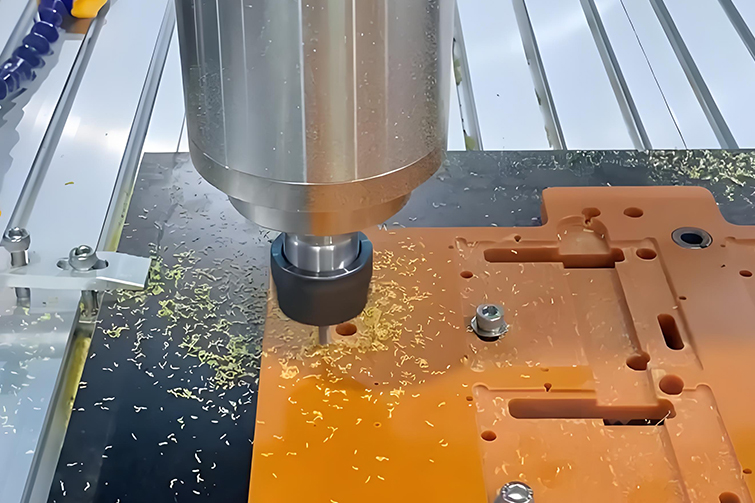
5. Trimming: CNC routing or waterjet cutting ensures precise edges. Avoid laser cutting for thick materials due to heat-affected zones.
Common Challenges and Solutions
One frequent issue is webbing (folds in corners). Mitigate by increasing material temperature or adding vacuum slots near deep areas. Thinning occurs in deep draws; use female molds or pre-stretching techniques. Warpage can be minimized by uniform cooling and using shrinkage compensation in mold design (typically 0.5–1%). For large parts, frame clamping must be tight to prevent slippage.
Applications in Various Industries
In automotive, large thick vacuum forming produces bumpers, dashboards, and interior trims. Aerospace uses it for cabin panels and fairings. Construction relies on it for cladding, skylights, and signs. Even medical devices like MRI covers benefit from the process's ability to create large, sterile shells. The key advantage is cost-effective tooling compared to injection molding, especially for low-to-mid volume production.
Frequently Asked Questions
What is the typical maximum sheet size for large size thick vacuum forming?
Depending on the machine, sheet sizes can range from 2m x 3m up to 4m x 8m. Custom machines exist for even larger parts.
How do you prevent thinning in thick vacuum forming?
Use a plug assist to help distribute material, or a female mold with generous radii. Also, ensure the sheet is heated evenly and the vacuum is applied quickly.
What are the differences between thick and thin vacuum forming tooling?
Thick forming requires molds with higher thermal conductivity (often aluminum) and more robust clamping to handle the greater forces. Thin forming molds can be made of wood or resin.
Can thick vacuum forming be used for prototyping?
Yes, especially with epoxy molds or 3D printed molds for short runs. However, for production, aluminum molds are preferred for their durability and thermal properties.
Related Posts