




Common Processing Procedures for Plastic Sheets
Plastic sheet processing is a highly systematic manufacturing technology that transforms rigid or semi-rigid plastic flat materials into usable products through physical forming, cutting, joining and finishing. With the advantages of mature technology, high efficiency and stable quality, plastic sheet processing has been widely used in packaging, construction, automotive, electronics and medical industries. A complete set of plastic sheet processing procedures usually includes material preparation, heating and forming, cutting and machining, surface treatment, assembly and inspection, each link directly determines the performance, appearance and service life of the final product.
Material preparation is the first and most important step in plastic sheet processing. Before formal processing, workers need to select the appropriate sheet type and thickness according to product requirements, such as PVC, PP, PE, ABS, acrylic, polycarbonate and other materials. Different plastics have different hardness, toughness, heat resistance and corrosion resistance, so they must be matched with corresponding processing parameters. At this stage, the sheet needs to be checked for surface flatness, cracks, scratches and color differences, and cleaned to remove oil, dust and static electricity to avoid affecting the subsequent forming effect. In mass production, sheets are usually automatically loaded, positioned and fixed to ensure stability during processing.
Heating and forming is one of the core processes of plastic sheet processing, which is mainly used to make sheets into three-dimensional shapes. Thermoforming is the most common method, including vacuum forming, pressure forming and hot bending. The sheet is sent to a heating oven, heated to a softening temperature, and then adsorbed or pressed onto the mold surface under negative pressure or positive pressure, cooled and shaped to obtain a fixed shape. Hot bending is to heat the local area of the sheet and bend it into a certain angle, which is often used to make protective plates, baffles and display stands. Extrusion is also a common forming process, which produces continuous sheets by melting plastic particles and extruding them through a die. Proper temperature control is the key to ensuring good forming effect, avoiding deformation, bubbling or tearing.
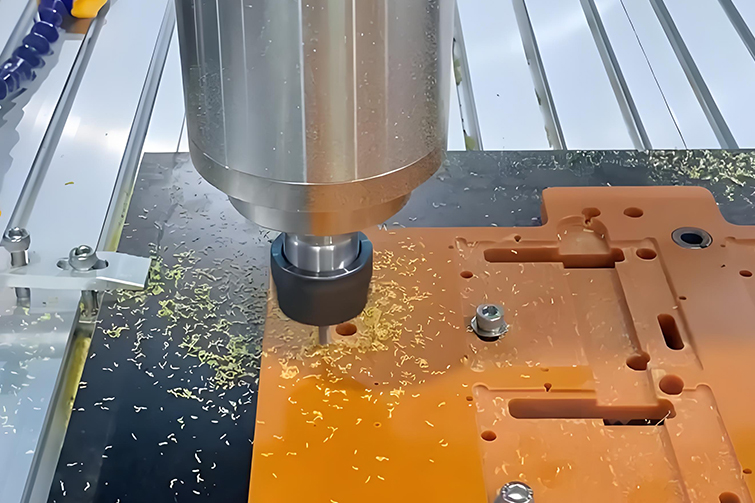
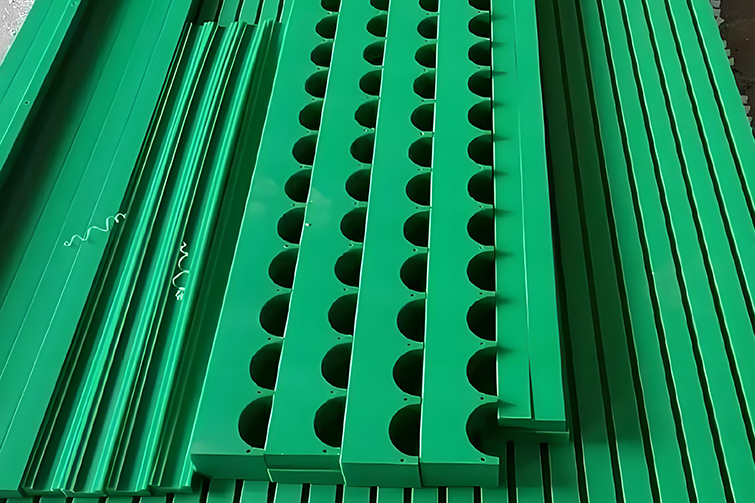
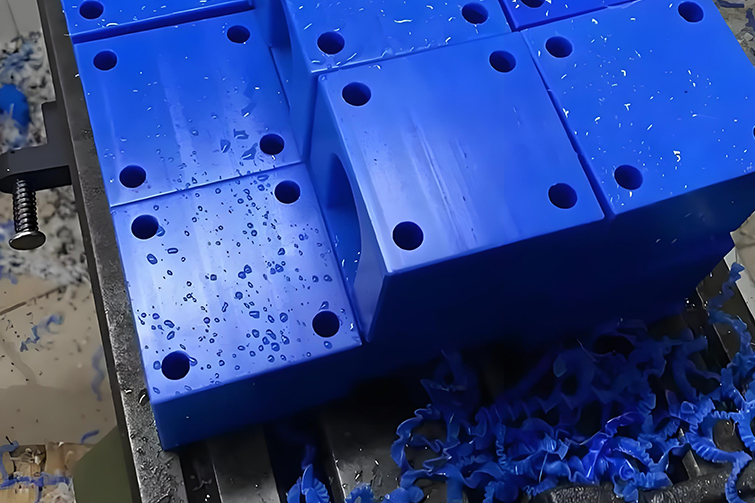
Cutting and machining are used to accurately adjust the size and shape of the sheet. Common cutting methods include laser cutting, CNC cutting, sawing, die cutting and water jet cutting. Laser cutting has high precision, fast speed and smooth incision, suitable for complex patterns and precision parts. CNC cutting can realize automatic operation according to the programmed path, with good consistency. Die cutting is suitable for mass production of simple shapes, with low cost and high efficiency. After cutting, the sheet may also undergo drilling, milling, grinding and other machining processes to make mounting holes, notches, threads and structural details. These processes require high precision to ensure that the product can be accurately assembled and used.
Surface treatment is an important process to improve the appearance and performance of plastic sheets. Many plastic products need surface modification to increase wear resistance, UV resistance, anti-static capacity or aesthetic effect. Common surface treatment processes include polishing, spraying, printing, film coating, frosting and anti-fingerprint treatment. Polishing can make the surface smooth and transparent, especially for acrylic and PC sheets. Spraying can provide various colors and protective layers to prevent aging and corrosion. Screen printing, digital printing and film pasting are used to add patterns, logos and text. Surface treatment not only improves the appearance quality of the product, but also extends its service life and enhances market competitiveness.
Assembly and inspection are the final procedures of plastic sheet processing. After forming, cutting and surface treatment, multiple parts need to be connected and fixed into a complete product. Common connection methods include bonding, welding, screw fastening and snap assembly. Bonding uses special adhesives to ensure firm and beautiful joints; welding uses hot air or ultrasonic to melt plastic connections, with high strength and good sealing. After assembly, the product must undergo strict quality inspection, including size detection, appearance inspection, performance test and structural stability test. Unqualified products will be eliminated or repaired to ensure that each finished product meets the use standards.
With the development of intelligent manufacturing, plastic sheet processing is gradually moving towards automation and intelligence. Automatic production lines integrate loading, heating, forming, cutting and handling, which greatly improves production efficiency and product consistency. At the same time, the application of new materials and new processes also makes plastic sheet processing more environmentally friendly and energy-saving.
In general, plastic sheet processing is a complete industrial system composed of multiple interrelated processes. Each step from material selection to final inspection has strict technical requirements. Through standardized and refined processing procedures, plastic sheets can be efficiently produced into high-quality products with various shapes and properties, providing important support for modern industry and daily life.
Related Posts