




Mastering 4 Meter Thick Sheet Vacuum Forming: Techniques, Challenges, and Solutions
Understanding 4 Meter Thick Sheet Vacuum Forming
4 meter thick sheet vacuum forming is a specialized process used to create large, durable parts from thermoplastic sheets. Unlike standard vacuum forming, which handles thinner materials (typically 1–6 mm), thick sheets up to 4 meters require robust machinery, precise temperature control, and careful material handling. Applications include automotive body panels, boat hulls, industrial tanks, and architectural cladding. The key is to balance heat distribution, vacuum pressure, and cooling to prevent defects like thinning, warping, or incomplete forming.
Essential Equipment for Large-Scale Forming
To handle 4 meter thick sheets, you need a heavy-duty vacuum former with a large platen area. The machine must support sheet thicknesses of 10 mm to 50 mm or more, depending on the material. Key components include:
Heating System: Ceramic or quartz infrared heaters arranged in zones to ensure uniform heating across the sheet's surface. For thick sheets, multi-stage heating is critical to avoid overheating the surface while the core remains cold.
Vacuum System: High-capacity vacuum pumps with reservoirs to maintain consistent suction. The platen must have evenly spaced holes (5–10 mm diameter) for rapid air evacuation.
Clamping Frame: Pneumatic or hydraulic clamps must securely hold the sheet edges to prevent slipping during heating and forming. For 4 meter sheets, a four-sided clamping frame with adjustable tension is recommended.
Cooling System: Controlled cooling through fans or misting systems to reduce cycle time and minimize distortion.
Material Selection and Preparation
Common materials for 4 meter thick sheet vacuum forming include ABS, HDPE, polycarbonate, and acrylic. Each has different heating profiles and shrinkage rates. For example:
ABS (Acrylonitrile Butadiene Styrene) offers good impact resistance and formability; recommended heating range 160–180°C.
Polycarbonate requires higher temperatures (180–210°C) and slower cooling to avoid stress cracking.
HDPE (High-Density Polyethylene) is cost-effective but prone to warping; careful drying is essential to prevent bubbles.
Before forming, the sheet must be stored in a dry environment to eliminate moisture, which can cause steam bubbles during heating. For thicknesses over 20 mm, pre-drying at 80–90°C for several hours is recommended.
Heating Strategies for Thick Sheets
Heating a 4 meter thick sheet uniformly is the greatest challenge. The ideal method is gradual heating with multiple passes. Start preheating at a lower intensity (e.g., 60% power) to warm the core, then increase to full power to reach the forming temperature. Use a pyrometer or thermal imaging camera to monitor surface temperature gradients. The sheet should sag slightly (about 2–5 cm) when ready—this indicates the core has reached the glass transition temperature (Tg). Overheating can cause degradation, while underheating leads to poor detail reproduction.
Forming Process and Pressure Application
Once the sheet is heated, quickly move it over the mold and initiate vacuum. For 4 meter thick sheets, the vacuum pump must achieve a minimum of 28 inches of mercury (inHg) to pull the sheet fully against the mold. Use a male mold to reduce thinning, as thick sheets stretch significantly. Apply vacuum in stages: first low vacuum to seat the sheet, then full vacuum once the material is in contact. Hold the vacuum for at least 30 seconds to allow the sheet to cool and solidify. For complex molds, consider plug assist or pressure forming (using compressed air) to improve detail.
Common Defects and Troubleshooting
Even with proper setup, issues can arise:
Thinning or Tearing: Caused by uneven heating or insufficient material. Use thicker sheets or add material banking (localized thicker areas) near deep draws.
Warping: Occurs due to non-uniform cooling. Ensure even cooling by using fans or misting on the mold side; avoid drafts.
Webbing: Folds between deep cavities; reduce vacuum speed or increase sheet temperature slightly.
Bubbles: Indicate moisture; pre-dry the sheet thoroughly and check for leaks in the heating system.
Poor Detail: Enhance vacuum pressure or increase heating time; for very fine textures, use a textured mold surface.
Post-Forming Operations
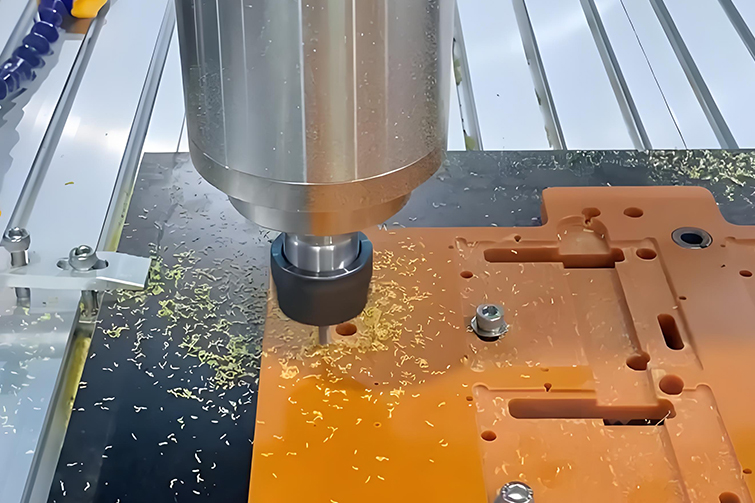
After forming, allow the part to cool slowly to room temperature. Annealing at 70–80°C for 1–2 hours can relieve residual stresses, especially for polycarbonate or acrylic. Trim excess material using CNC routers or waterjet cutters for precision. For 4 meter parts, 5-axis trimming may be needed to handle complex shapes. Finally, inspect the part for dimensional accuracy and surface finish; small imperfections can be sanded or filled.
Cost and Time Considerations
Vacuum forming thick sheets is capital-intensive due to machinery and mold costs. However, it is cost-effective for low to medium production runs (100–10,000 parts) compared to injection molding. Cycle times can range from 15 minutes to 1 hour per part, depending on thickness and complexity. To optimize, use aluminum molds for faster heat transfer and consider twin-sheet forming for hollow parts.
常见问题
What is the maximum thickness that can be vacuum formed?With specialized equipment, sheets up to 50 mm (2 inches) can be formed. For 4 meter wide sheets, thickness typically ranges from 10 to 40 mm to maintain formability.
How do I prevent thinning in deep draws?Use a thicker starting sheet, lower vacuum speed, and a mold with generous radii. Plug assist or pressure forming can also help distribute material evenly.
What materials are best for outdoor applications?Polycarbonate and ASA (Acrylonitrile Styrene Acrylate) offer UV resistance and durability. For impact resistance, use polycarbonate or ABS with UV stabilizers.
Can I reuse scrap material?Yes, but only if uncontaminated. Grind scrap into regrind and mix with virgin material at up to 20% ratio. Ensure consistent particle size for even melting.
What is the typical cycle time for a 4 meter thick sheet?Depending on thickness and part complexity, expect 20–45 minutes for heating, forming, and cooling. Larger parts may require multiple heating zones and extended cooling.
Related Posts