




The Ultimate Guide to Large Length Thick Vacuum Forming: Techniques, Benefits, and Best Practices
Introduction to Large Length Thick Vacuum Forming
Large length thick vacuum forming is a manufacturing process that extends the capabilities of traditional vacuum forming to produce parts with significant dimensions and material thickness. This method is ideal for creating large panels, enclosures, and components that require strength and rigidity. The process involves heating a thick plastic sheet until pliable, then draping it over a mold and applying vacuum pressure to form the shape. Understanding this technique is crucial for industries such as automotive, aerospace, and industrial equipment, where large parts with consistent quality are needed.
Key Benefits of Large Length Thick Vacuum Forming
One of the primary advantages of large length thick vacuum forming is the ability to produce parts with minimal tooling costs compared to injection molding. This makes it cost-effective for low to medium volume production. Additionally, the process allows for the use of a variety of materials, including ABS, polypropylene, and polycarbonate, which can be selected based on impact resistance, chemical resistance, or thermal properties. The resulting parts have excellent structural integrity and can withstand harsh environments. Moreover, the process is relatively fast, with cycle times often ranging from a few minutes to an hour depending on thickness and complexity, enabling quicker turnaround for prototypes and production runs.
Critical Considerations for Material Selection
When engaging in large length thick vacuum forming, material choice is paramount. Thicker sheets, typically ranging from 0.125 inches to 0.5 inches or more, require materials with good melt flow characteristics to avoid uneven thickness or bridging. Polycarbonate is excellent for high-impact applications, while ABS offers a balance of strength and cost. For outdoor exposure, materials with UV stabilizers are recommended. It is also important to consider the material's shrinkage rate to ensure dimensional accuracy, as thicker materials may exhibit different shrink patterns than thinner ones.
Design Guidelines for Successful Parts
Designing parts for large length thick vacuum forming requires attention to several factors. Draft angles are essential to facilitate part removal from the mold; a minimum of 3 to 5 degrees is recommended for deep draws. Corner radii should be generous, ideally at least three times the material thickness, to prevent stress concentrations and material thinning. Additionally, large flat areas can be prone to warping; incorporating embossing, ribs, or corrugation can add stiffness without increasing thickness. Undercuts should be avoided or designed with secondary operations in mind, as they complicate mold release.
The Step-by-Step Process of Large Length Thick Vacuum Forming
The process begins with clamping a thick plastic sheet in a frame and heating it in an oven until it reaches the forming temperature. The sheet is then moved over a mold, and a vacuum is applied to draw the material against the mold surface. For large parts, plug assist or pressure forming may be used to ensure uniform thickness distribution. After cooling, the part is trimmed and finished. Key parameters to control include heating time, vacuum pressure, and cooling rate, especially for large length thick vacuum forming where material mass can lead to uneven cooling.
Common Applications and Industry Use Cases
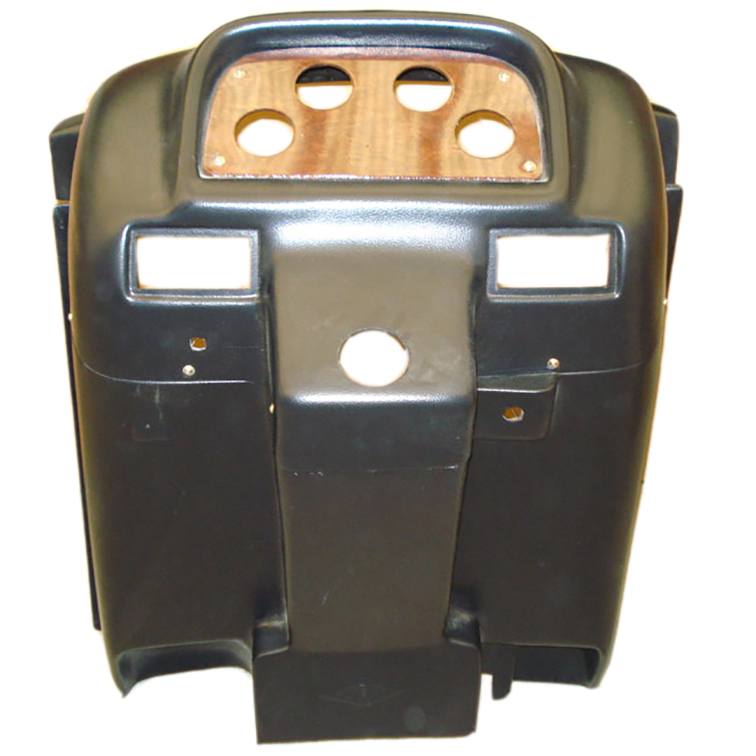
Large length thick vacuum forming is widely used in transportation for vehicle body panels, interior trim, and dashboards. In the medical field, it produces large equipment housings and MRI machine covers. For industrial equipment, it creates machine guards, tanks, and structural components. The process is also popular in the construction industry for decorative panels and in aquaculture for large water tanks. The ability to produce strong, lightweight parts with smooth surfaces makes it a go-to for many OEMs.
Common Questions
What is the maximum size that can be vacuum formed?
While there is no absolute limit, typical machines can handle sheets up to 10x12 feet or larger. For extremely large parts, specialized systems using segmented molds or twin-sheet forming may be employed. It's important to consult with manufacturers regarding machine capabilities for large length thick vacuum forming.
How does material thickness affect the forming process?
Thicker materials require longer heating times and more vacuum pressure to form properly. They also have a higher tendency to sag or thin out in corners. Proper process control and mold design are essential to maintain uniform wall thickness. Preferential heating and plug assist can help mitigate these issues.
Can large length thick vacuum forming produce parts with tight tolerances?
Yes, but tolerances are typically wider than injection molding, often ±0.5% or ±0.060 inches. Achieving tight tolerances requires careful mold design, stable materials, and post-forming machining if necessary. For critical dimensions, CNC trimming is often used.
What are the cost implications compared to other processes?
Tooling costs are significantly lower than injection molding, making it cost-effective for runs up to a few thousand parts. However, per-part costs are higher due to slower cycle times. For large parts, vacuum forming can be more economical than rotational molding or fiberglass layup due to lower labor and material waste.
Related Posts