





The Complete Guide to Large Length Thick Vacuum Forming: Techniques, Benefits, and Applications
Understanding Large Length Thick Vacuum Forming
Large length thick vacuum forming is an advanced variation of traditional vacuum forming, designed to produce parts with significant dimensions (often over 6 feet) and material thicknesses exceeding 3-6 mm. The process involves heating a thick plastic sheet until pliable, then stretching it over a mold and using vacuum pressure to conform the sheet to the mold's shape. Unlike thin-gauge forming, thick-gauge requires longer heating times, robust clamping frames, and vacuum systems with higher capacity to handle the material's weight and stiffness.
Key Equipment and Material Considerations
The success of large length thick vacuum forming depends heavily on specialized equipment. Heating ovens must have even heat distribution across the entire sheet, often using ceramic or quartz heaters. Vacuum pumps need to generate strong suction, typically 20-28 inches of mercury, to pull thick sheets into deep cavities. Clamping frames should securely hold the sheet without sagging during heating. Common materials include ABS, HIPS, polycarbonate (PC), and acrylic (PMMA). For outdoor use, UV-stabilized grades are recommended, while chemical resistance applications may require PVC or Kydex.
Step-by-Step Process for Large Length Parts
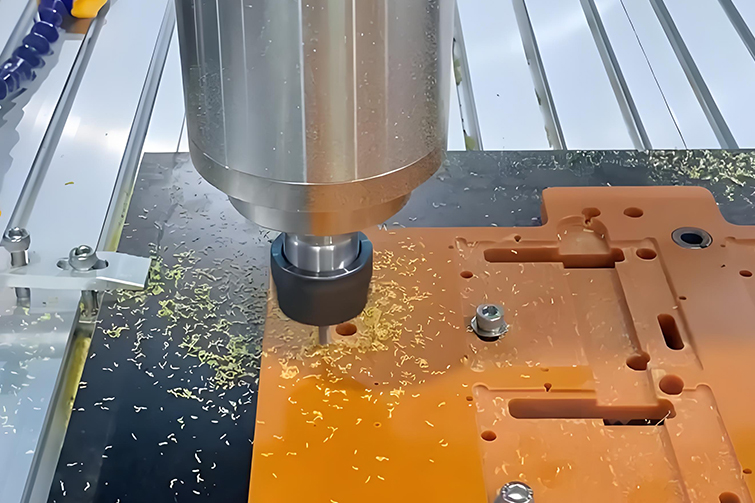
The process begins with sheet cutting to size, allowing extra material for trimming. The sheet is then placed in the oven and heated to the recommended forming temperature (e.g., 160-180°C for ABS). Drafting of the mold must account for shrinkage: polypropylene shrinks about 1.5-2%, while polycarbonate shrinks less. After forming, parts undergo cooling, often accelerated with fans or mist sprayers. Finally, trimming is done using CNC routers, waterjets, or saws, with care to avoid cracking thick materials.
Advantages over Other Manufacturing Methods
Compared to injection molding, large length thick vacuum forming offers lower tooling costs (50-80% less) and faster turnaround for prototypes and low-volume production. It also allows for larger part sizes without the need for large injection molding machines. Versus compression molding, vacuum forming provides better detail replication and shorter cycle times. However, the process is limited to relatively simple geometries with draft angles, and part thickness can vary.
Common Applications and Industries
Large length thick vacuum forming is widely used in automotive for truck bed liners, dashboards, and interior panels. In medical devices, it forms equipment housings and patient supports. Industrial applications include machine guards, tanks, and lighting fixtures. Additionally, it is popular in point-of-purchase displays and kiosks due to its ability to create large, durable enclosures.
Design Guidelines for Optimal Results
When designing for large length thick vacuum forming, consider these tips: maintain a uniform wall thickness by avoiding sharp corners; use a minimum draft angle of 3-5 degrees; incorporate radii of at least 2-3 times the material thickness; and add texture or ribs to enhance rigidity. Also, allow for shrinkage (typically 0.2-0.5%) and include a trim allowance of 1-2 inches around the part.
常见问题
What is the maximum part size achievable?
Many systems can form parts up to 4x8 feet or larger. Specialized machines can process sheets up to 10x20 feet, depending on oven size and vacuum capacity.
How thick can the sheet be?
Thicknesses from 3 mm to 9.5 mm are common, but some applications use sheets up to 12 mm. Thicker sheets require more heat and longer cycle times.
What is the typical cycle time?
For a large part (e.g., 4x8 feet), cycle time ranges from 20 to 45 minutes, including heating, forming, cooling, and trimming.
Can undercuts be formed?
Yes, but they require movable mold sections or secondary operations. Simple undercuts with draft angles are possible, but steep ones may need manual trimming.
How to avoid webbing or bridging?
Ensure proper heating and vacuum application. Use draw ratio guidelines (depth vs. width) and consider using a plug assist for deep draws.
Related Posts